

An Introduction to the Range of Evolution Separators
The primary role is to gently separate clod, stones, haulm, and loose soil from the following range of fruit, vegetables, and alliums (although this list continues to grow):
Potatoes, Salad Potatoes, Sweet Potatoes, Onions, Shallots, Carrots, Parsnips, Celeriac, Chicory, Swedes, Red Beet, Brussels Sprouts, Flower Bulbs, Apples, Bell Peppers.
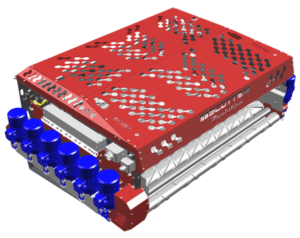
The Evolution Separator generally works by extracting the debris between 2 contra rotating rollers. The larger roller (spiral roller) has air chambers and is deformable with a spiralling rib. The smaller roller (clod roller) is smooth with a choice of finishes. The clever design of the ‘spiral rib’ entrains the debris down into the valley between the rollers, where, if the debris is soft enough, it is then crushed and ejected down below the separator. Stones will also pass between the rollers as the ‘spiral roller’ readily deforms around the stone, so it does not allow losses of crop at this time. If larger stones enter the valley and there is not enough deformation in the spiral roller, there is a safety mechanism that allows the clod roller to spring away momentarily to allow the stone to pass through.
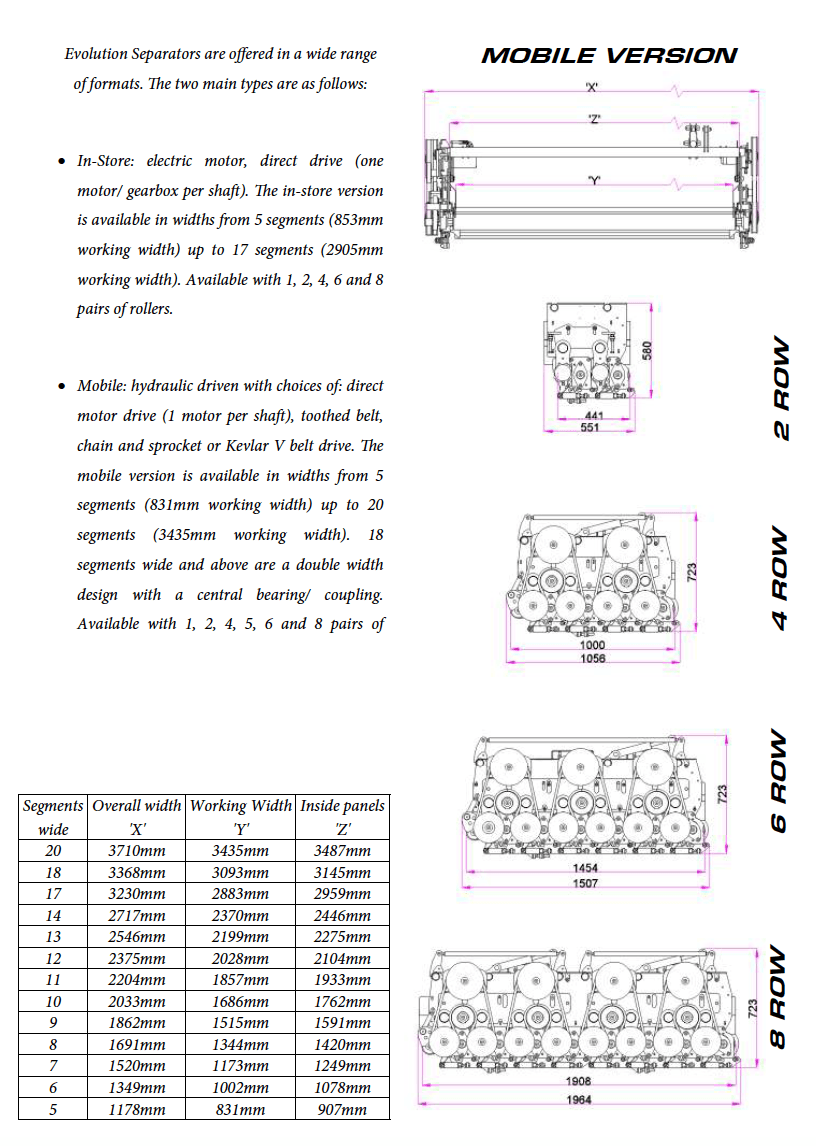
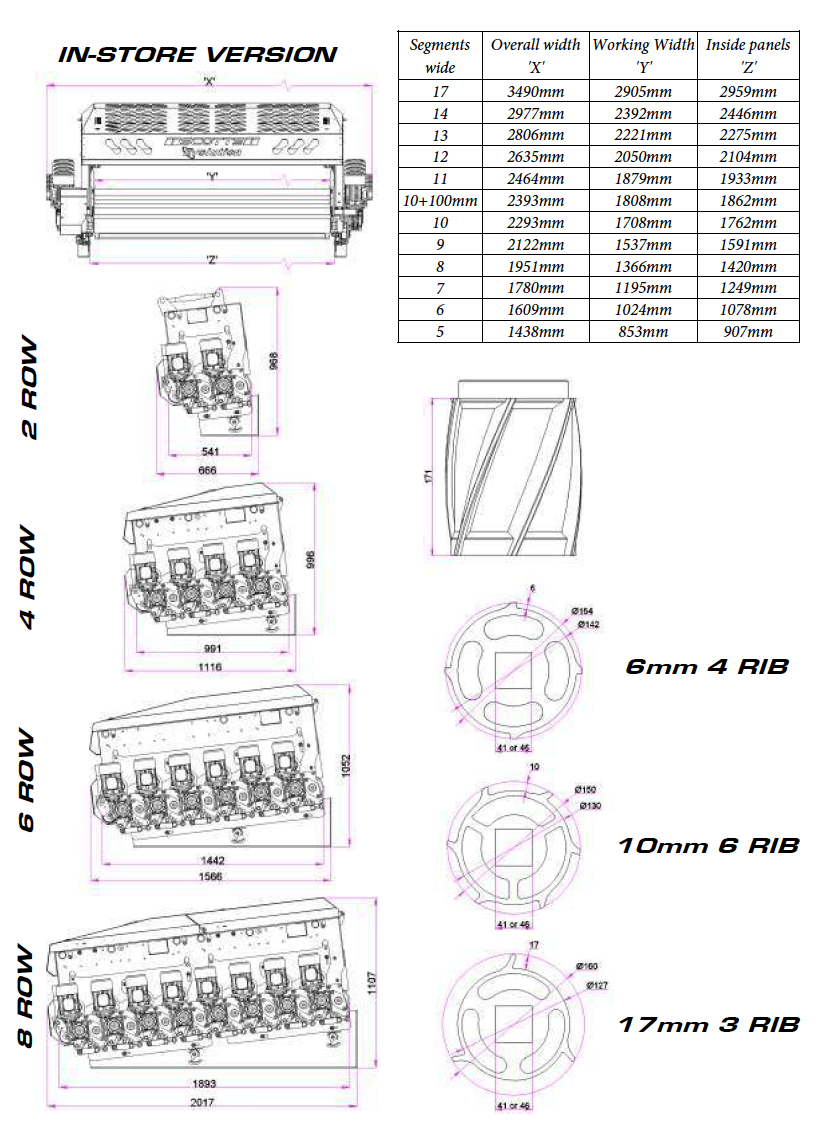
In-Store or Mobile Versions

Self-Cleaning
Self-cleaning of the unit is achieved by the constant deformation of the spiral rollers, inertia, and a fixed scraper mounted under each clod roller.
The Best for Stone Protection
The large air chambers are essential for protection against stone damage to the protruding spiral rib by allowing the rib to deform around the stone.

Total Control

In order to vary the amount of separation and fine-tune the separator for different crops/conditions, the unit is equipped with a host of easy-to-operate functions, as listed below:
- Speed control of the spiral roller shafts.
- Speed and direction control of each pair of clod rollers.
- Gap adjustment between each contra rotating pair of rollers (all gaps are adjusted in a single movement on each side).
- Height adjustment of clod rollers (all clod rollers lift at once).
- Angle adjustment of the separator.
Product Features
Functions and Operations of the Separator
1. Spiral Shaft
The spiral shafts consist of up to 14, 6 fluted spiral segments per shaft. The spiral shafts are fixed in position and cannot be moved.
In order to remove a spiral shaft (for replacement of spiral segments), there is a plate bolted to the main side panel which when removed, allows the shaft to be drawn straight out of the side.
Chain adjustment for the transfer roller drive is not necessary as this operation is performed by the self-adjusting chain tensioner. This should be set pre-tensioned.
2. Clod Rollers
The clod rollers are held in position by a hanger which is fixed to the up/down adjustment profile using a circlip. The clod rollers are adjustable up and down as well as left to right in order to increase/decrease the gap between the spiral and clod roller to achieve more/less separation.
There is a scraper positioned under each clod roller to keep the roller free from soil etc. sticking to it. It is important that these scrapers are correctly adjusted with a minimum gap of 3mm.
Direction of rotation is an important factor. The unit is supplied with the option of running the clod roller in either direction. If the direction of the clod roller is needed to be changed for any reason, we strongly recommend the scrapers are turned around, at reset, to their 3mm gap for correct scraping of the roller. Warranty claims will not be upheld if the scrapers are not correctly fitted for their use.
3. Spring Tension Adjustment for the Clod Rollers
Clod rollers should not ‘spring away’ excessively only to allow larger particles to pass through such as stones 1” or greater.
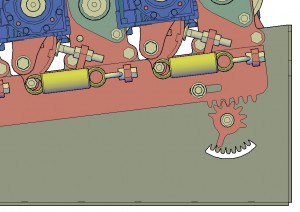
Spring tension is usually set at the factory but if more tension is required or if springs are replaced etc. the tension on each spring can be adjusted by the M12 studs located below each clod roller. First, loosen the locking nut, then adjust with a 19mm spanner to the required position. You may find that this will alter the gap between the clod roller and the spiral roller which will affect the separating of the machine. Therefore, it is important to adjust all other spring tension adjusters to obtain equal gaps throughout the machine.
4. Clod Roller Height Adjustment
In order to adjust the clod roller height, there is a turnbuckle adjuster or a linear ram located on the top edge of the main panel. To adjust the height, lengthen the turnbuckle to lower the clod rollers and shorten it to lift the rollers. It is advisable to adjust the turnbuckle in small amounts to avoid jamming of the movement.
As the turnbuckle adjusts both sides of the machine at once, both left and right settings will remain equal.

5. Clod Roller Gap Adjustment
Adjustment of the gap is achieved by firstly loosening the 2 x M12 pinch bolts and then turning the starwheel adjuster either forwards or backwards with a 19mm socket. This adjusts all of the clod rollers together, closer to or further away from the spiral rollers. Ensure the gap on both sides of the machine is adjusted equally by using the guide under the pointer. The spring tension is not effected during this adjusting and therefore will not need re-adjusting. Remember to re-tighten pinch bolts after adjusting.
To fine tune the gap there is an M12 bolt which moves the clod rollers individually and increases the spring tension (as mentioned above).
6. Do’s and Dont’s
Never run the machine when the clod rollers are in contact with the spiral rollers (there must always be a gap present) or severe damage may occur!
If the clod rollers are in the extraction mode e.g. running in the opposite direction to the spiral rollers, it is permitted to have the rollers touching. Care must be taken however, in dry conditions as both rollers surface speeds should be similar as one may act as a brake against the other. In wet conditions, the clod roller can be run at a much slower speed, if required, in the extraction mode.
Getting the Best from your Evolution Separator
Do not attempt to adjust the settings of the machine until you have read and understood this information.
Summary
There is an infinite set of adjustments available on this machine and care should be taken when adjusting parts of the machine. It is advisable only to alter 1 setting at once, to avoid confusing what is happening with the machine.
Shaft Speeds
The faster the spirals turn, the less time potatoes will sit in the valleys and avoid losses (ideally between 120 and 130 RPM). The aim is to run the spiral shafts at the minimum speed to achieve maximum separation without loss of the crop. To help achieve this, it is possible to run the clod rollers at different speeds: faster for maximum extraction, and slower for less separation (this can be as little as 30 RPM) when they are contra rotating.
Clod Roller Adjustment
The clod rollers become more aggressive at separating when they are in a higher position and less when lowered. When separating large particles such as clods of earth, a higher position for the clod roller allows such debris to stall for a while allowing the flutes of the spiral rollers to grind down the clod.
The gap adjustment is also critical and once set to an absolute minimum, will eliminate the loss of a small crop such as salad potatoes or baby carrots, dramatically improve self-cleaning on sticky soils. A gap larger than 1mm will not allow clods to deform the spiral roller which is essential in sticky conditions for self cleaning.
Clod Roller Direction
For root crops such as carrots, parsnips, onions, shallots and bulbs etc. we recommend that clod rollers run in the same direction as the spiral rollers and at a lower RPM. On main crop potatoes, generally 2 or more of the clod rollers can be reversed, this will allow haulm to be extracted and larger clods depending on the level of debris. Note, If all clod rollers are turning in the same direction as the spiral rollers it is then possible to reduce the spiral roller speed (no slower than 50 RPM is recommended).
In Summary (Contra Rotating)
Maximum Separation
- Reduce speed of spiral rollers to optimum (120- 130 RPM).
- Increase speed of clod rollers.
- Lift clod rollers up.
- Increase gap between spiral and clod roller (will drastically reduce self-cleaning in wet and sticky conditions).
Minimum Separation
- Increase speed of spiral rollers (130 – 135 RPM).
- Decrease speed of clod rollers (or change direction to forward).
- Decrease gap between spiral and clod roller (close as possible less than 1mm).
- Lower clod rollers.