
Choosing the Best Spiral Roller for Your Evolution Separator

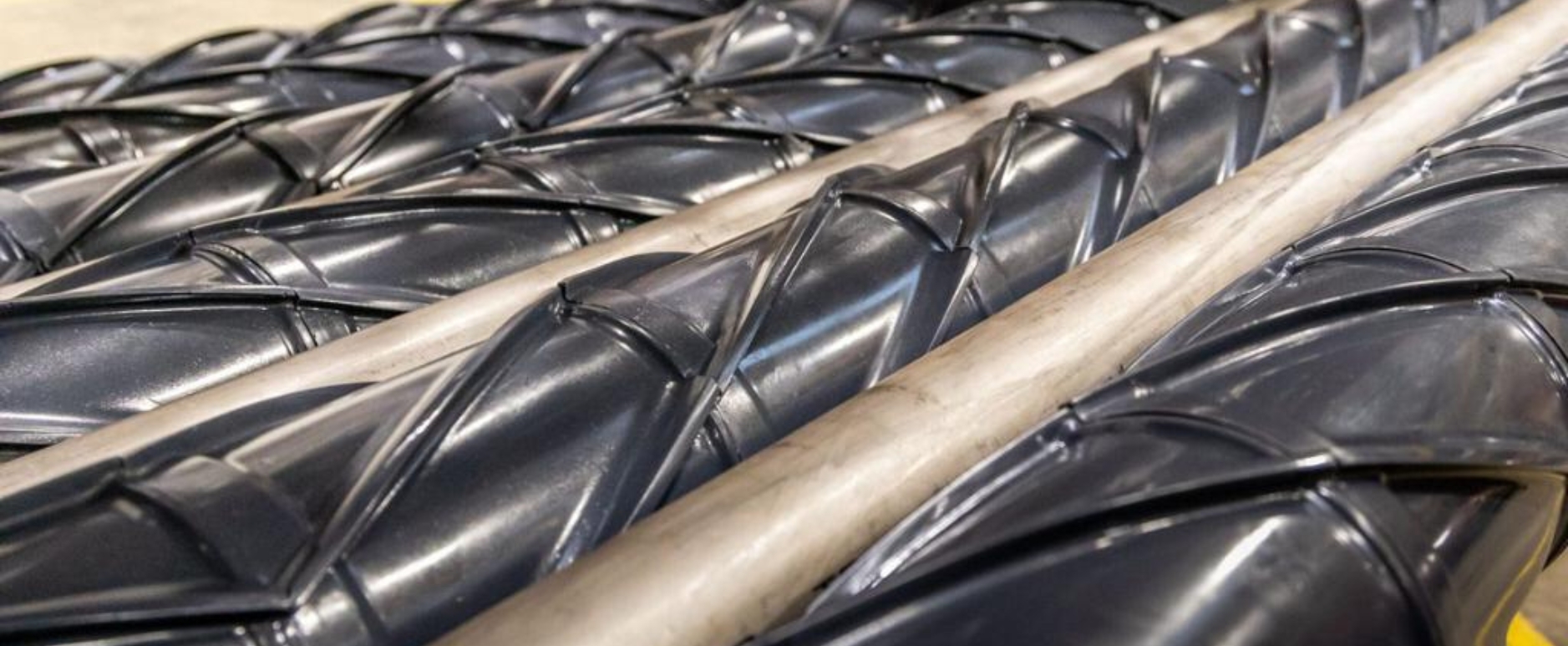
At the heart of the Evolution Separator are the spiral rollers, the key component responsible for separating soil, clods, and haulm from your crop while handling it gently.
How Spiral Rollers Work and Self-Clean
The spiral roller works with the following clod roller (‘P roller’) and has two main jobs: extracting haulm/leaf matter and everything else (clods, stones, and soil).
- Extracting haulm: The flat-topped, stiff ribs pinch stems firmly against the clod roller without bunging root balls. A small gap (1mm) is enough, there is no need to press the rollers tightly together, which can cause premature wear.
- Extracting clods, stones, and soil: The rib tread “nibbles” at irregular clods and pulls them down between rollers. Large air chambers allow the roller to deform around hard clods and stones, minimising losses and preventing soil buildup.
- Self-cleaning: This occurs when the roller deforms regularly and has enough inertia (we recommend around 130RPM in wet conditions). This action naturally flings mud and debris off the roller.
Choosing the Correct Roller
Least Aggressive – 4 Rib 6mm Spiral Roller
Best for: Small or delicate crop and lighter conditions
Why choose it: The less aggressive tread prevents pinching or damage and is ideal for lighter, drier soils. Aggressiveness can be increased when needed by running the clod rollers in reverse (operated in pairs).

Moderately Aggressive – 6 Rib 10mm Spiral Roller
Best for: Standard main crop and variable conditions
Why choose it: More pronounced ribs and smaller body diameter ensure excellent soil and clod separation. Provides flexibility to reduce aggressiveness in light or dry conditions while still being capable of removing large volumes of clod, soil, and haulm when conditions turn more challenging.
 Most Aggressive – 3 Rib 15mm Spiral Roller
Best for: Small or delicate crop and lighter conditions
Why choose it: The less aggressive tread prevents pinching or damage and is ideal for lighter, drier soils. Aggressiveness can be increased when needed by running the clod rollers in reverse (operated in pairs).
Combining Roller Types
It is possible to combine spiral roller types. For example, on a 6-row machine, the first two rows could use 6 Rib 10mm rollers, while the remaining four rows use 4 Rib 6mm rollers, as the highest volume of soil is typically at the beginning of the machine.
Note: Only one roller type can be fitted per shaft.
Roller Colours and Shafts
Shaft sizes: 40mm (machines up to 2.0m) and 45mm (machine 2.0m+)
Roller colours:
- Blue – for optical sorter detection
- Light grey – 40mm shafts
- Dark grey – 45mm shafts
Additional Features
- Segment lengths: Standard 171mm, with shorter options at 122mm and 100mm
- Transfer rollers: Soft polyurethane with a slight rib to lift and carry stones efficiently
Key Takeaway
Selecting the right spiral roller depends on soil type, season, and machine configuration. From light handling to extreme conditions, the Evolution Separator’s range of spiral rollers ensures optimal cleaning performance, crop protection, and reliability.